If you manage a web site, you probably included certain "key words" with the aim of influencing search engine rankings. But how do you know that you used the right words? According to Wordtracker.com, you probably didn't.
"You probably are competing with too many other sites that use the same words," says Mike Mindel, founder of Wordtracker, which is based in London. "That dilutes your effort to differentiate your offering. And web users probably are searching related terms that could describe your business, but that you neglected to incorporate into your site."
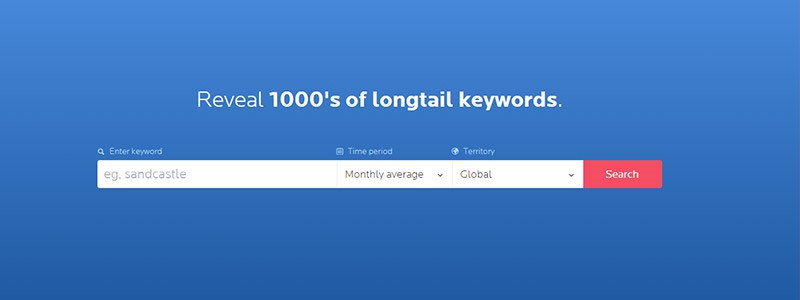
Wordtracker has built a highly successful business dedicated to identifying which keywords are both popular and have the least competition. One of the most technically sophisticated services of its kind, Wordtracker relies on Texis to perform many important functions.
Wordtracker provides a highly automated service, as opposed to the manual analyses offered by many "optimization" or "placement" consultants. It starts with collecting millions of actual search terms typed by users on major metacrawlers. Wordtracker continually refreshes this database so that it reflects popular terms, which shift on an ongoing basis.
With this data loaded in its Texis database, Wordtracker performs several related functions for its subscribers. It takes advantage of Texis's thesaurus and morpheme processing to identify as broad a range as possible of terms related to one's business that people search for. It uses Texis's fuzzy searching to find common misspellings. It provides counts of how many times each word has been searched in recent weeks. And it calculates "keyword effectiveness" -- the relationship between a term's frequency as a search and its frequency of appearance on web sites (the higher the former, and the lower the latter, the better).
"Wordtracker helps find keyword combinations that bear any relation to your business or service - many of which you might never have considered," Mindel says. And for customers of pay-for-placement services such as Overture, Wordtracker is more thorough in suggesting terms to bid on than tools those services provide themselves, he says.
To accomplish its statistical operations, a relational database was essential. But the Wordtracker database also needed to behave as a search engine, allowing users to "search the search terms." The two kinds of functionality, relational and search, needed to work together to sort the results and calculate various values for each word retrieved.
"Before we found Texis, we were using another SQL database for many of these functions and were having a terrible time, because its search capabilities were so weak." Mindel says. "Texis solved many technical issues for us."
Mindel also was impressed with Texis's high performance reindexing capability. "Texis builds a database and two search indexes on 42 million keywords in under an hour which is nice," he says. "And you can load up a second database without impacting performance on the first, which I've never seen before.
"Much of what we do depends on Texis. It was a very wise purchase," says Mindel.